
Un cru sauvage des forêts du Kongo Central — brut, en micro-lots.A wild vintage from the Kongo Central forest — raw, in micro-lots.
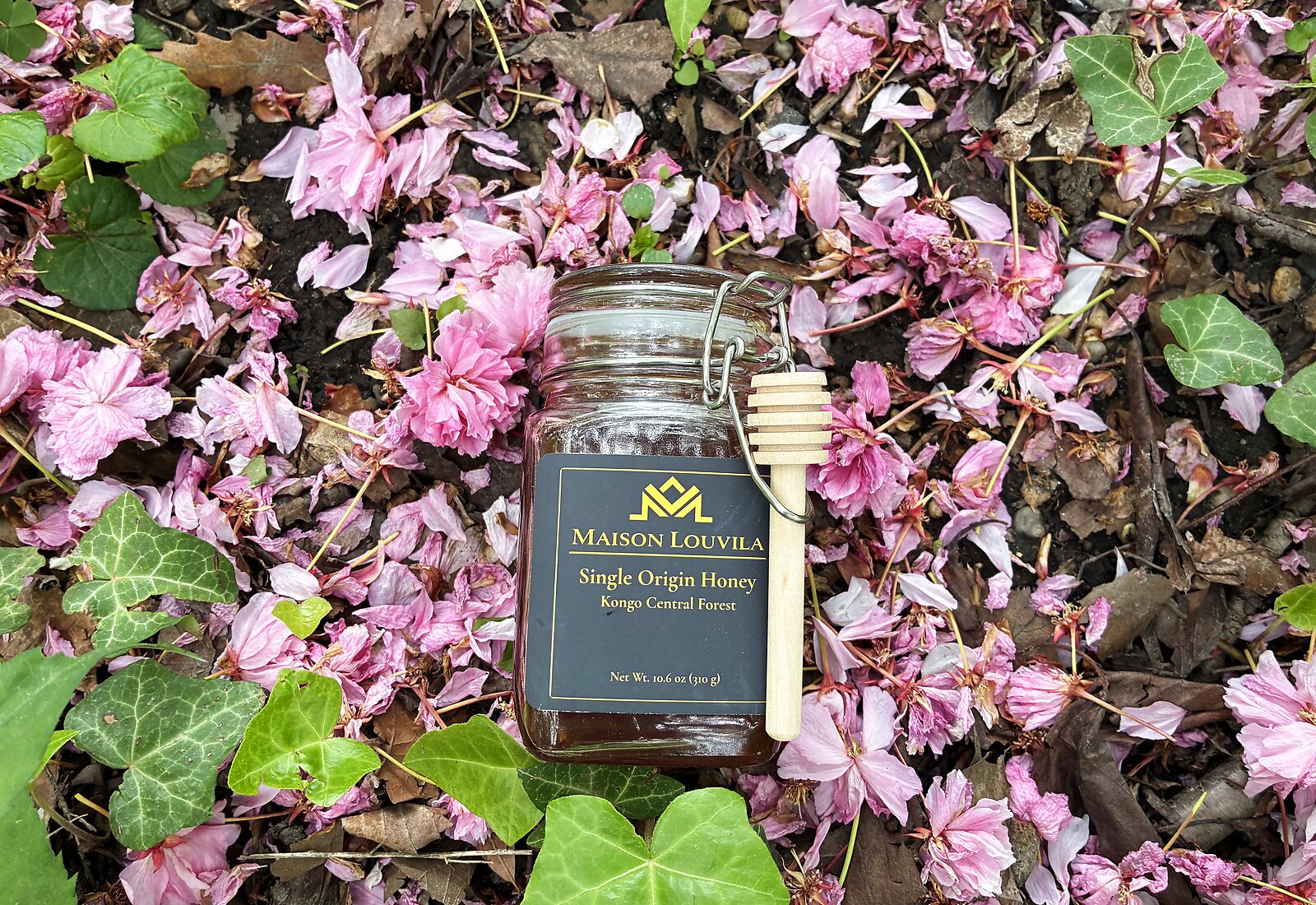 Réserve · 350 g
Un miel de forêt sauvage de la RDC au profil aromatique profond et stratifié. Libéré en micro-lots, en quantités limitées. A wild-forest honey from the DRC with a deep, layered aromatic profile. Released in micro-lots, in limited quantities.
D'où vient ce goût ? Les abeilles butinent la flore sauvage et polyflorale des forêts du Kongo Central — arbres mellifères, fleurs et sous-bois — au gré des saisons. Récolté brut et peu filtré, le miel conserve pollens et arômes : d'où sa robe sombre et ses notes profondes de caramel et de malt. Where the taste comes from. The bees forage the wild, polyfloral flora of the Kongo Central forest — melliferous trees, blossoms and undergrowth — across the seasons. Harvested raw and minimally filtered, the honey keeps its pollens and aromas: hence its dark hue and deep caramel-and-malt notes.
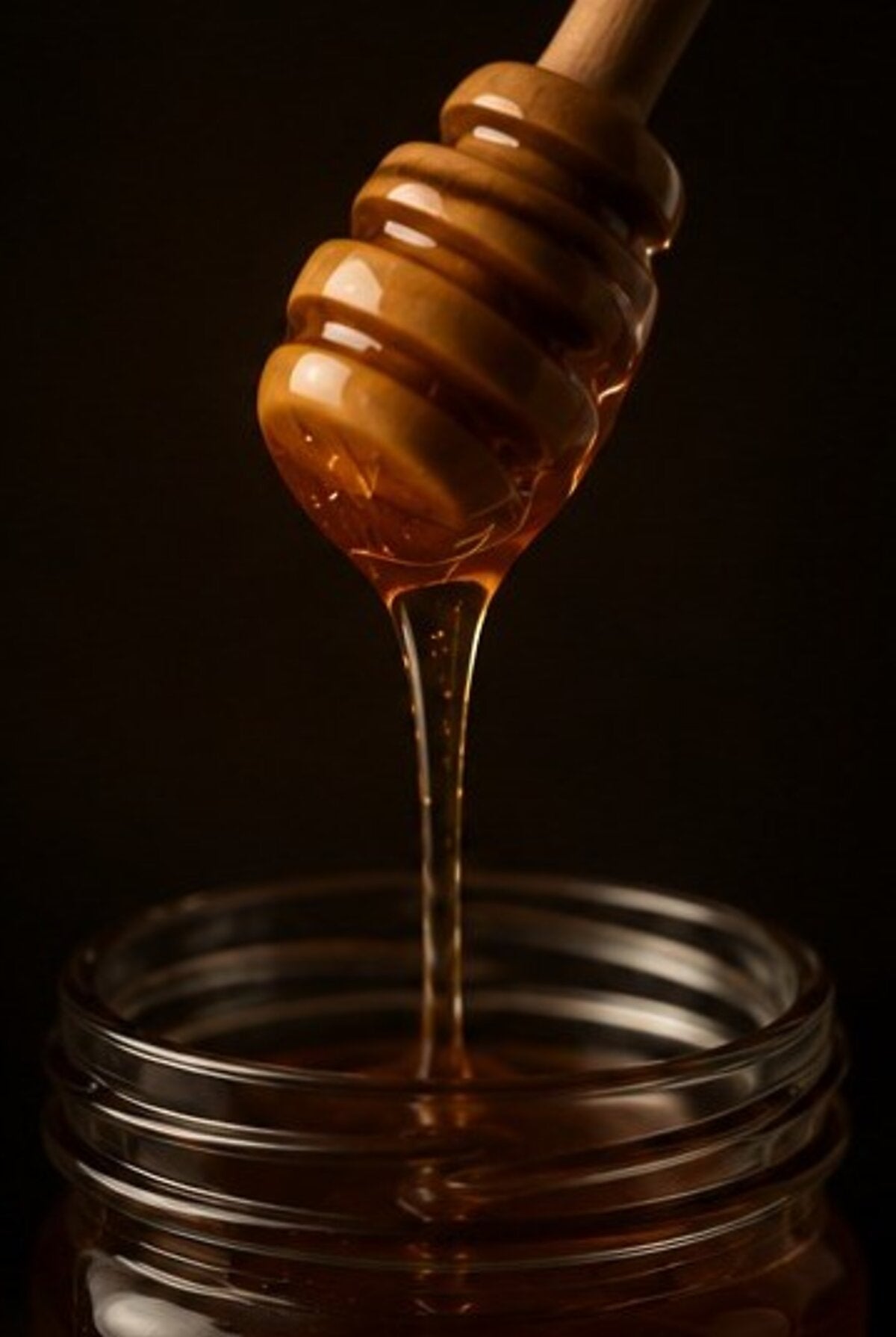
À la cuillère, le miel se déroule en un fil épais et ininterrompu — signe d'un cru brut, riche en sucres naturels et jamais chauffé. Une matière vivante, pensée pour la table. Off the dipper, the honey unwinds in a thick, unbroken thread — the mark of a raw vintage, rich in natural sugars and never heated. A living matter, made for the table.
Avant même de voyager, chaque récolte passe par deux laboratoires indépendants aux États-Unis : une analyse pollinique qui lit sa signature botanique, et un criblage de pesticides. Before it even travels, every harvest passes through two independent U.S. laboratories: a pollen analysis that reads its botanical signature, and a pesticide screen.
Le Dr Linda Scott Cummings, du PaleoResearch Institute (Golden, Colorado), a mené une mélissopalynologie complète — l'étude des pollens du miel — avant importation. Les préparations, « très propres », révèlent des pollens parfaitement conservés : une signature dominée par l'arbre-parasol (Musanga), pionnier de la forêt, accompagnée de palmier à huile africain, d'acacia et de mimosa. C'est cette flore sauvage et libre qui donne au miel sa couleur ambrée et sa profondeur. Dr. Linda Scott Cummings, of the PaleoResearch Institute (Golden, Colorado), carried out a full melissopalynology — the study of a honey's pollen — prior to import. The preparations, described as "very clean," revealed beautifully preserved pollen: a signature led by the umbrella tree (Musanga), a forest pioneer, alongside African oil palm, acacia and mimosa. It is this wild, free flora that gives the honey its amber colour and its depth.
Sa concentration en pollen — plus de 500 000 grains par millilitre — dépasse largement celle d'un miel commercial courant. Selon le laboratoire, c'est la signature d'un producteur de petits lots, qui laisse aux abeilles le temps de concentrer le miel plutôt que de précipiter la récolte. Its pollen concentration — over 500,000 grains per millilitre — far exceeds that of ordinary commercial honey. In the laboratory's words, this is the hallmark of a small-batch producer who lets the bees concentrate the honey rather than rushing the harvest.
Avec nos remerciements au Dr Linda Scott Cummings et au PaleoResearch Institute — rapport technique 26-002, mai 2026. With thanks to Dr. Linda Scott Cummings and the PaleoResearch Institute — technical report 26-002, May 2026.
Un criblage multi-résidus « Diamond » de centaines de pesticides — insecticides, fongicides, herbicides — par GC-MS/MS et LC-MS/MS, avec un seuil de détection inférieur à 0,010 mg/kg. Résultat officiel : « aucun résultat positif ». Un miel brut, non assemblé, jamais chauffé, traçable jusqu'à son lot unique. A "Diamond" multi-residue screen of hundreds of pesticides — insecticides, fungicides, herbicides — by GC-MS/MS and LC-MS/MS, with a detection limit below 0.010 mg/kg. Official result: "no positive results." A raw, unblended honey, never heated, traceable to its single lot.
Rapports d'analyse — PaleoResearch Institute (rapport 26-002, mai 2026) et AGQ Labs (réf. AL-26/094646, avril 2026). Disponibles sur demande. Analysis reports — PaleoResearch Institute (report 26-002, May 2026) and AGQ Labs (ref. AL-26/094646, April 2026). Available on request.
Le format pour s'initier.The size to discover.
Le format du quotidien d'exception.The everyday-exceptional size.
Le format signature, en allocation.The signature size, by allocation.
Les formats et tarifs définitifs seront communiqués aux inscrits à l'ouverture des commandes. Quantités limitées par allocation de réserve. Final sizes and pricing will be shared with list members when ordering opens. Limited quantities by reserve allocation.